Skip to content


In modern conflicts, the deliberate destruction of cities and their heritage represents a deep and lasting tragedy. These acts of devastation do not only erase buildings or roads, but what even defines human civilization: identity and history. And, in the story of destruction, ISIS (ad-dawla al-islāmiyya) occupies a prominent position. In 2014, the terrorist organization proclaimed the establishment of a caliphate in the territories it occupied. Between 2014 and 2019, ISIS formed a totalitarian proto-state in Iraq and Syria.
Two examples testify to the devastation committed by ISIS: Palmyra, in Syria, and Mosul, in Iraq. The nature of their destruction, however, differed considerably. Palmyra has undergone a systematic and ideological campaign of cultural cleansing, meticulously executed by extremist forces. Mosul, on the other hand, has been upset by the continuation of a war in the middle of the city, associated with a scorched earth policy. We will try to show in this article which parts of these cities have been lost; and why.
Palmyra: A Surgical Strike on History
The ancient city of Palmyra, often hailed as the “Pearl of the Desert,” stood as a breathtaking testament to the confluence of Roman and Syrian civilizations. A UNESCO World Heritage site, it was a vibrant oasis city, strategically positioned at the crossroads of ancient trade routes. Its magnificent architecture, a fusion of classical and local styles, drew scholars and tourists from across the globe, embodying a shared human heritage.
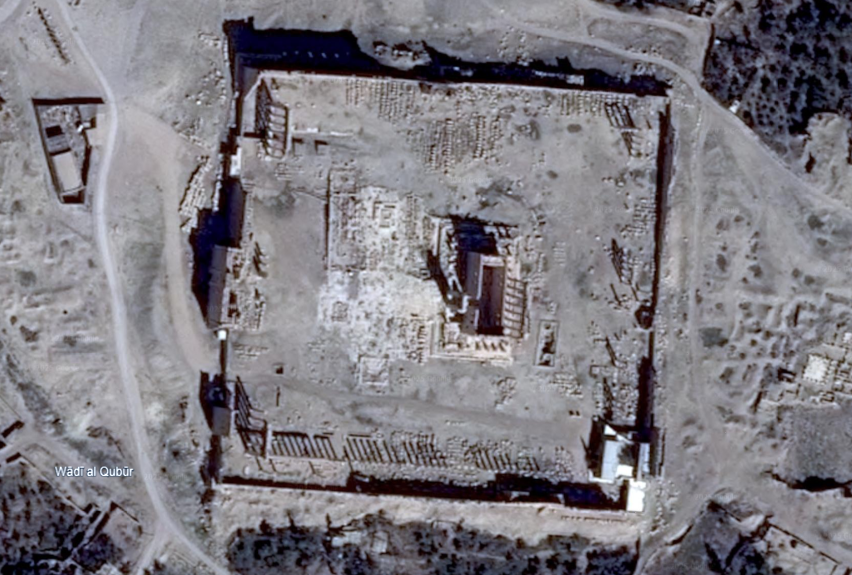
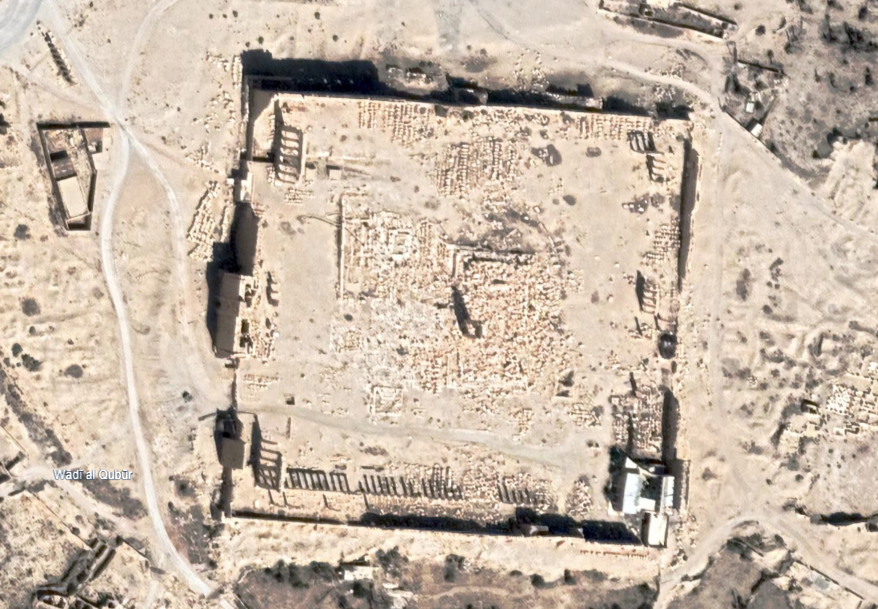
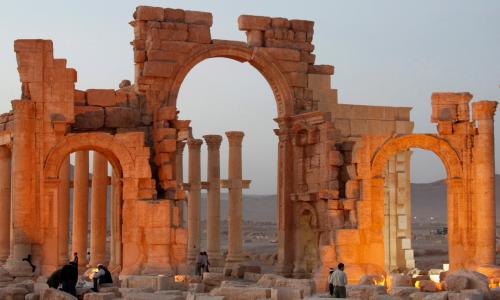
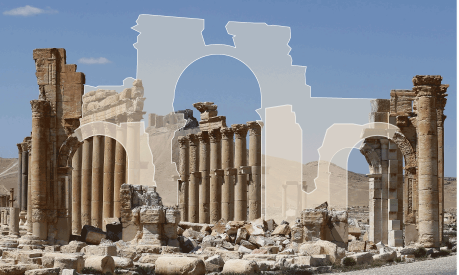
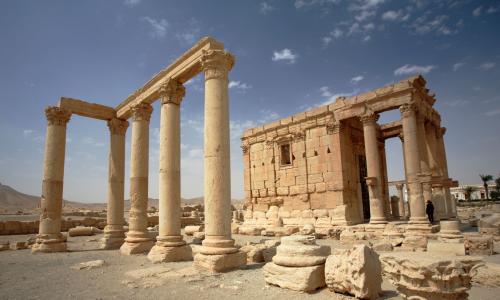
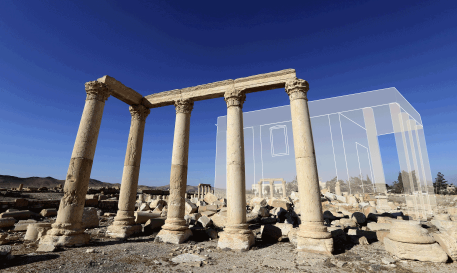
Before the beginning of the conflict, there were impressive structures in Palmyra that testified to a rich past. The Temple of Bel, for example, was an immense building. More than a site of worship, it was the symbol of the architectural prowess of the city. Built as a tribute to the Roman emperor, Septimius Severus, the Monumental Arch of Palmyra or Arch of Triumph, was the entrance to the colonnade that led to the Temple. The Temple of Baalshamin, smaller, was really well preserved and had a great religious importance. In addition, many funerary towers composed the surrounding landscape. These towers were in fact tombs with several floors, characteristic of the funerary practices of Palmyra. The Museum of Palmyra contained many different things. It housed a large collection of artifacts, statues and historical documents detailing the history of the city. These were not mere ruins but living historical treasures.
The arrival of ISIS marked the beginning of the systematic destruction of Palmyra. The extremist group took control of the city in May 2015 until March 2016 and again from December 2016 to March 2017.
- The Temple of Baalshamin was one of the first targets, exploded on August 23, 2015.
- A week later, on August 30, 2015, the Temple of Bel, was completely obliterated using large amounts of explosives.
- The Funeral Towers were also destroyed in August 2015, testifying to the targeting against ancient burial sites.
- On October 4, 2015, the iconic Arch of Triumph was blown
- The Museum of Palmyra has suffered massive looting and destruction of countless statues and artifacts, highlighting a dual threat of theft for financial gain and destruction for ideological reasons.
- the Citadel of Palmyra has certainly suffered damage but has not been completely destroyed.
- The Lion of al-Lat, dedicated to a pre-Islamic Arabian goddess, has been knocked over but it escaped total destruction.
These acts of destruction were not random. They were part of a “cultural cleansing” plan. The extremist group wanted to erase pre-Islamic history and any symbol deemed idolatrous. The destruction was an iconoclastic voluntary act. ISIS used these acts of destruction as a tool for psychological warfare and propaganda. The group released videos of the demolitions, turning physical destruction into a message of defiance to the world. It was an attempt to demoralize the populations by showing their ability to erase important symbols.
Mosul: Blown by the Wind of War
The city was dominated by the iconic Al-Nuri mosque **and its leaning minaret Al-Hadba, affectionately known as “the Hunchback”. This minaret and the mosque were two important symbols of Mosul, with great historical and religious significance. In, 2014, it was at this place that the IS leader Abu Bakr al-Baghdadi had declared the establishment of the «caliphate». The Mosul University Library housed vast collections of rare manuscripts and books. The Cultural Museum of Mosul has preserved pricelses Mesopotamian and Assyrian artifacts, while many ancient churches and monasteries, such as the monastery of Saint Elias, highlighted the city’s deep-rooted religious diversity. Five vital bridges Tigris River Bridges connected the two banks of the city, serving as essential arteries for daily life and trade. Before the siege, Mosul was a lively metropolis, animated by population, trade and numerous cultural activities.
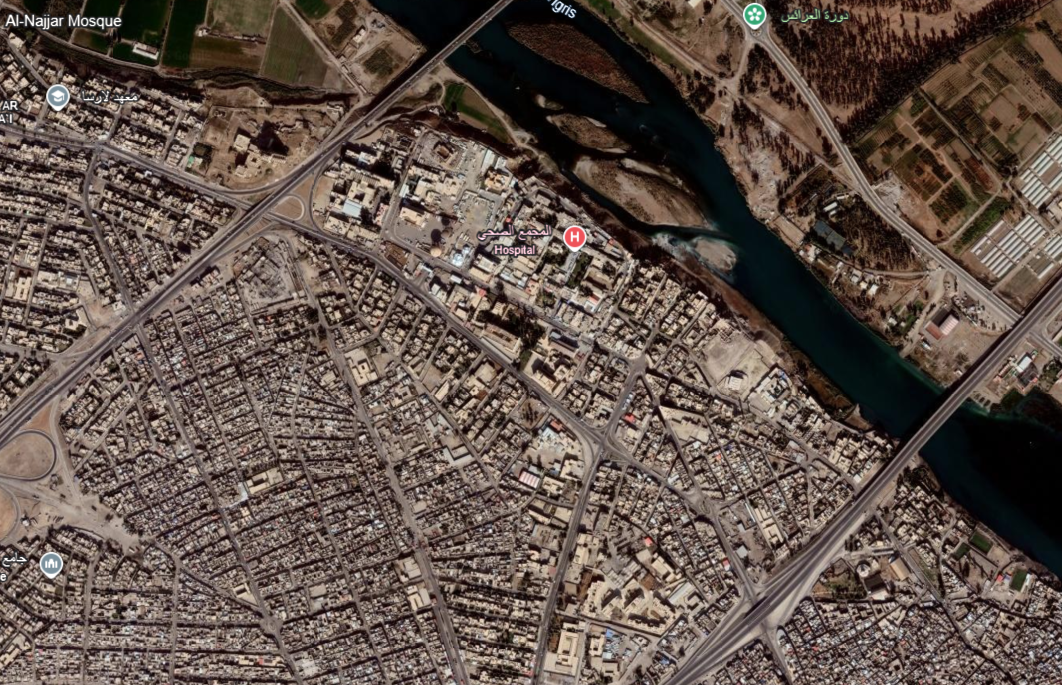
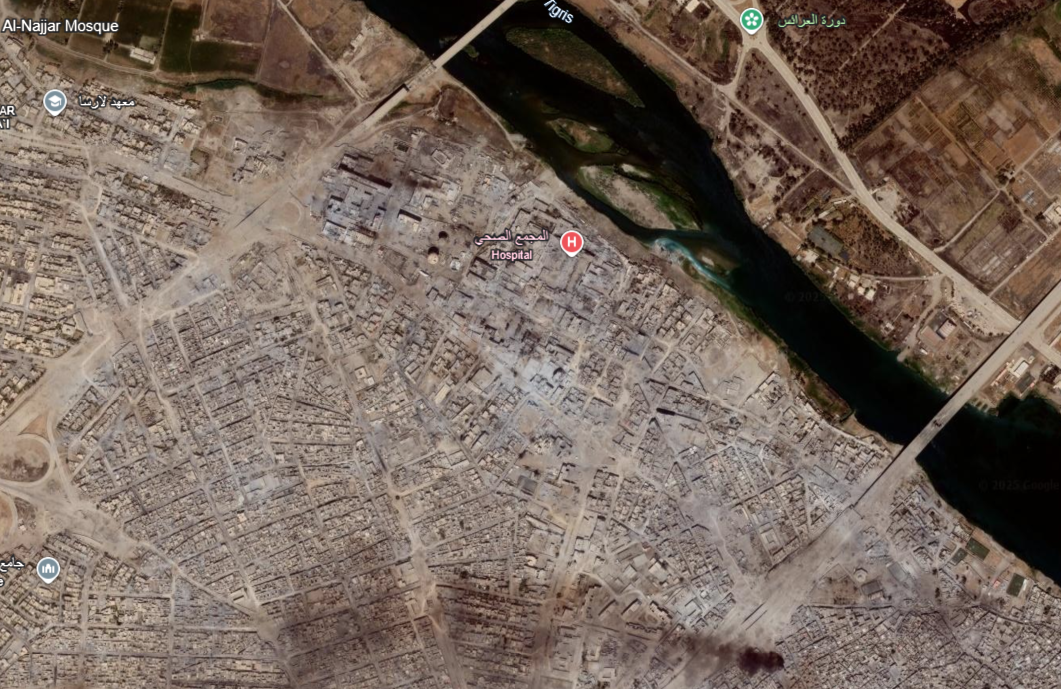
The liberation of Mosul from ISIS involved a nine-month battle from October 2016 to July 2017. This urban war has transformed the city, in particular its historic old town, into a devastated landscape. The scale of destruction in Mosul differed significantly from that in Palmyra, as it was mainly a consequence of the protracted fighting and scorched earth tactics of the extremist group.
- The Old Town suffered the brunt of the fighting, with about 80% of its structures destroyed.
- The destruction of the Al-Nuri mosque and its minaret Al-Hadba on June 21, 2017, as the Iraqi forces approached, particularly shocked the world. In a symbolic act, ISIS self-destructed itself by annihilating the very core of its caliphate.
- The library of the University of Mosul was burned, resulting in the loss of more than 100,000 books and manuscripts.
- The Cultural Museum of Mosul was looted and destroyed
- many churches and monasteries, including the ancient Monastery of St. Elijah, were targeted. These attacks testify to the targeting against intellectual and religious diversity.
- The five *bridges over the Tigris river have been destroyed, crippling connectivity and trade.
- Roads, hospitals and schools have also been extensively damaged or destroyed further weakening the city’s functionality and ability to recover.
Around 100,000 civilians were trapped in the old city, facing famine and a severe lack of water, while thousands of people were killed. Widespread destruction of homes, livelihoods and community structures meant that the human cost went well beyond the loss of life, encompassing shattered lives and displaced communities. The graphic reality of the destruction of Mosul is thus profoundly human. The scale of the ruins is reminiscent of ISIS’ scorched-earth* policy. This highlights another facet of conflict-induced destruction: the devastating collateral damage of modern urban warfare, where entire cities become battlefields.
Conclusion
The contrast between the devastation of Palmyra and Mosul offers a particular look at modern conflicts. In Palmyra, the Islamic State carried out a precise attack on cultural and historical links to erase part of the city’s identity. The streets of Mosul, however, have undergone intense urban warfare. The city itself has become a battlefield, and therefore the cost is not just material. And although the two cities may have recovered from the passage of ISIS, this highlights the deep and lasting impact of these conflicts on human civilization, revealing how war can erase historical monuments, the past, and therefore the future of a people.
*The scorched earth policy, in military context, is a tactic consisting of destroying or seriously damaging resources, infrastructures and anything that could be useful to the enemy in a given area, in order to make them unusable.